The Half-Life of Ativan: How Long Does It Take For Lorazepam To Be Eliminated?







Table of Contents
- What Is the Half-Life of Ativan?
- How Long Will Lorazepam Remain in My System?
- Half-Life Versus Length of Action for Lorazepam
- Does a 1 MG Dose of Ativan Have a Different Metabolism Than Other Standard Doses?
- Factors That Influence Metabolization Rates
- Detection Times for Lorazepam on Drug Tests
- Interactions With Other Drugs Are Still Possible After Therapeutic Effects Have Worn Off
- Managing Difficulties Associated With Ativan Use
- Treating Ativan Misuse and Substance Use Disorder
- The average half-life of Ativan is approximately twelve hours. However, it typically falls between 10 and 20 hours.
- The majority of adults who take Ativan will metabolize the majority of the medication within two to four days.
- There is no difference in how quickly or slowly a 1-milligram dose of lorazepam is metabolized compared with other standard doses.
- There is a large amount of misinformation regarding the terms half-life, duration of action, clearance, and drug-test detection times.
- All four of these separate concepts are interrelated, yet very few individuals realize it.
- Age, liver function, renal function, and usage pattern can all delay the metabolism of lorazepam.
- Although the relaxing effects of Ativan have worn off, measurable amounts of the medication can remain in the body for extended periods.
Ativan is the generic term for lorazepam, which is a prescription medication that is classified as a benzodiazepine, often informally known as a “benzo,” and regulated as one of several scheduled drugs.[1] As an anxiolytic, lorazepam works by increasing gamma-aminobutyric acid (GABA) activity, the primary inhibitory neurotransmitter found throughout the CNS. Due to this mechanism of action, lorazepam is approved by the FDA and commonly prescribed for treating various types of anxiety disorders and certain seizure disorders.
To assist individuals taking lorazepam and their families in making informed choices about the medication’s administration and potential risks, a basic understanding of how lorazepam is metabolized and how long it remains in the body after a final dose can be beneficial. This section provides information on Ativan’s half-life, its metabolism, and the individual factors that can accelerate or slow clearance.
What Is the Half-Life of Ativan?
The half-life of a medication is the time required for the amount of the drug in circulation to decrease by 50%.[2] Unlike medications that leave the body immediately after discontinuation, lorazepam decreases progressively and consistently in concentration over time.
A general breakdown of how the quantity of lorazepam decreases in the body would appear as follows:
- 100% (initial dose)
- 50% (first half-life)
- 25% (second half-life)
- 12.5% (third half-life)
- .625% (fourth half-life)
- …and so forth, until almost all medication leaves the body.
Average Half-Life for Ativan
Sources vary on the half-life for Ativan, with some reporting Ativan’s average half-life is twelve hours, with a potential range between ten and twenty hours.[3] Similar to any medication, individual variability exists due to multiple factors discussed in detail below.
How Long Will Lorazepam Remain in My System?
Elimination of a medication is generally complete after approximately five half-lives. Using Ativan’s twelve-hour half-life as an example, that would equate to:
- After twelve hours: 50% of the original dose
- After 24 hours: 25%
- After thirty-six hours: 12.5%
- By approximately sixty hours, nearly 98% has been eliminated. For most adult users with normal hepatic and renal function, nearly all of the medication is eliminated within two to four days.
Please note that this is merely an approximate time frame. Many people metabolize lorazepam at rates greater than average, while others, including older adults with decreased liver or kidney function or frequent use patterns, may require additional days to eliminate the medication.
Half-Life Versus Length of Action for Lorazepam
One of the most common areas of confusion is between half-life and how long a user experiences the effects of Ativan. While half-life and duration of action are related, they represent distinct characteristics.
| Half-life | Duration of effects |
| Amount of time required for drug levels to decline by 50% | Amount of time during which symptom reduction is observed |
| Approximately 12 hours on average | Generally, six to eight hours for most orally administered doses |
| Defines the total time the drug remains in the body | Defines the total time during which the patient experiences relaxation or calmness |
As a simple analogy, when considering a person may not feel the calming effects of lorazepam once they have ceased to feel the effects from a dose, they may still retain measurable amounts of lorazepam in their system for longer than initially anticipated.
Since many users continue to combine lorazepam with other CNS depressant medications after ceasing its therapeutic effects (such as benzodiazepines like alprazolam [Xanax], diazepam [Valium], etc.), distinguishing between these two parameters is essential for determining potential drug-drug interactions and subsequent dosage scheduling.
Does a 1 MG Dose of Ativan Have a Different Metabolism Than Other Standard Doses?
No. The dose size influences the total quantity of medication present in the body at any given time but does not influence the rate at which medication is metabolized. Regardless of whether an individual takes .5 mg, 1 mg, or 2 mg, the elimination half-life remains relatively consistent across healthy adult populations. Greater medication quantities indicate more to be metabolized, which may contribute to slightly longer durations before total elimination.
Factors That Influence Metabolization Rates
Multiple variables impact how quickly an individual metabolizes lorazepam, including:[4]
- Age: Older adults generally metabolize lorazepam at slower rates than younger adults, thereby extending both duration of effects and total time required for complete elimination.
- Liver function: Lorazepam undergoes primary glucuronidation rather than being metabolized via the CYP450 enzyme pathway used by many other benzodiazepines. This factor contributes to significantly fewer drug interactions via CYP450 pathways, as previously described.
- Renal function: Once lorazepam is converted to its inactive metabolites, they are excreted in urine. Impaired renal function can prolong the time these metabolites remain in the body without an equivalent effect on how quickly the parent compound is metabolized.
- Composition: Body weight, hydration status, and body fat content can all contribute to varying degrees of influence on the distribution and clearance of medication.
- Use patterns: Frequent dosing (i.e., daily) can create a state where high concentrations of drug accumulate over time as opposed to single-dose administrations made infrequently.
- Medication interactions: Co-administration of lorazepam with opioids or alcohol can increase CNS depressive effects relative to either agent by itself and enhance the risk of respiratory depression (shallow breathing that leads to a buildup of carbon dioxide and a lack of oxygen).[5]
Detection Times for Lorazepam on Drug Tests
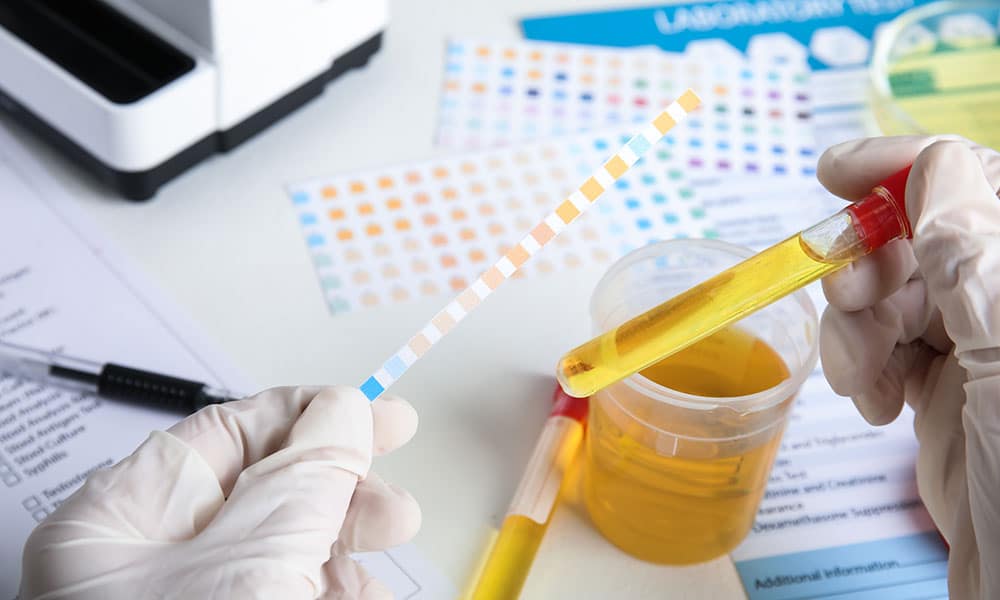
Detection times vary with the type of test conducted and do not directly correlate with the presence or absence of effects.[6]
| Type of test | Estimated detection window |
| Urine tests | Three to six days |
| Blood tests | One to three days |
| Saliva tests | Up to about twenty-four hours (test dependent) |
| Hair tests | Up to ninety days |
Positive results on these tests do not signify that a user is currently impaired. They indicate that measurable amounts of the medication or its metabolites were present at the time of testing.
Interactions With Other Drugs Are Still Possible After Therapeutic Effects Have Worn Off
Yes. Measurable amounts of lorazepam can persist in the body for extended durations after therapeutic effects have diminished. This consideration is most relevant when combining lorazepam with other agents that are CNS depressants, including:[7]
- Alcohol
- Opiates
- Sleep aids
- Muscle relaxers
- Antidepressants
- Other benzodiazepines (e.g., Xanax or Valium, diazepam)
All aforementioned substances are CNS depressants and can synergistically produce additive sedative effects and elevate the risk for serious CNS depressive adverse reactions. Caution is advised when administering combinations of these substances unless specifically directed by a physician.
Managing Difficulties Associated With Ativan Use
For most users taking Ativan on a short-term basis for therapeutic purposes, understanding half-life is simply part of basic pharmacology knowledge. Those taking higher doses than prescribed, frequently using Ativan for long periods of time, or possessing histories of substance use disorder(s) may develop patterns that evolve toward physical dependency or develop into Ativan addiction that appears difficult to overcome independently.
Signs indicative that a user’s Ativan use has become challenging to control include: requiring increased doses to achieve the same desired effects; withdrawal symptoms occurring between doses; observable changes in daily functioning or interpersonal relationships with family or friends due to continued use.
Treating Ativan Misuse and Substance Use Disorder
Treatment alternatives exist at every level of care, including:
- Medical detoxification is when healthcare professionals help patients manage withdrawal symptoms safely using medications and supportive care.
- Residential treatment programs that provide 24-hour structured care in a live-in setting.
- Partial hospitalization programs (PHPs) that offer intensive daytime treatment while allowing patients to return home at night.
- Intensive outpatient programs (IOPs) that offer a higher level of care than standard outpatient services without requiring overnight stays.
- Outpatient treatment programs that provide scheduled therapy and support while individuals continue living at home.
These options provide users experiencing difficulties with controlling their use patterns an opportunity to pursue an evidence-based pathway toward achieving long-term recovery goals. If difficulty arises in controlling Ativan use patterns, contact an experienced treatment team like Agape that is knowledgeable about benzodiazepines and co-existing psychiatric conditions.
When Should I Contact My Healthcare Provider?
It is recommended to contact your healthcare provider if you or a loved one experiences any of the following:
- Daytime drowsiness
- Perceived prolonged duration of effects from medication
- Known liver disease or kidney failure
- Increased age combined with perceived worsening or similar side effects
- New or pending prescriptions for other medications
- Pregnant or breastfeeding
- Physical dependence concerns or worries about withdrawal
Our Commitment to Clinical Integrity
Agape Treatment Center strives to maintain reliable and high-quality resources to assist individuals and their loved ones on their recovery journey. To accomplish this, Agape Treatment Center uses only trustworthy and peer-reviewed resources to back up all clinical information we provide. All resources created are medically reviewed by clinical professionals before publication and are updated as new advancements are made. The language used in our resources follows a person-first, stigma-free approach, enabling the reader to feel safe, respected, and empowered each step of the way in their recovery.
Read Full Editorial PolicyFrequently Asked Questions About Ativan Half Life
Start Your Healing Journey Today
24/7 Help · No Obligation · 100% Confidential

Treatment Approach